
Horse Bit Guide: A Comprehensive Overview
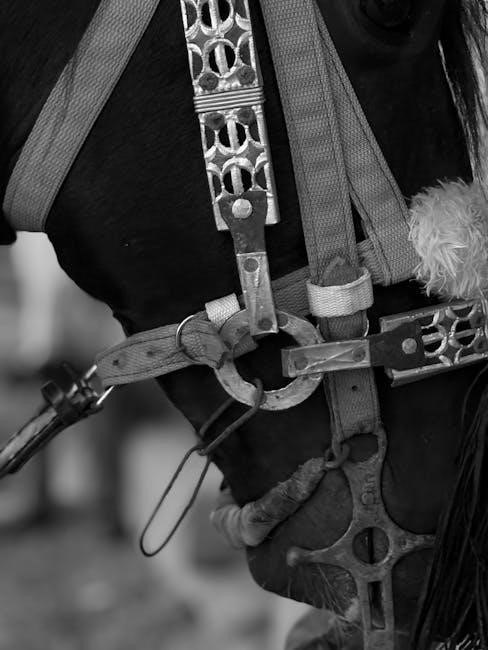
Understanding the diverse world of horse bits is crucial for effective communication and a comfortable ride. Bits range from mild
snaffles to more severe leverage and gag bits, each influencing control.
Cheekpiece configuration defines bit action, including snaffles, leverage bits, gag bits, and bitless bridles. Proper fit prevents discomfort and resistance.
Every horse is unique, requiring careful bit selection based on mouth conformation and training level. Consider the horse’s needs for optimal performance.
Horse bits are essential tools for communication between rider and horse, translating rein aids into understandable signals. They function by applying pressure to various points within the horse’s mouth – the bars, tongue, and corners – influencing direction and speed.
Bits aren’t about force, but precision. A correctly fitted bit encourages the horse to respond softly, while an ill-fitting or misused bit can cause discomfort, resistance, and even pain. The mouthpiece’s design, whether jointed or unjointed, significantly impacts the pressure distribution.
Different bit types cater to varying levels of training and horse sensitivity. From the gentle action of a snaffle to the increased leverage of a curb bit, understanding these differences is paramount. Choosing the right bit is a crucial step towards harmonious riding and a willing partnership with your equine companion.
The Importance of Bit Selection
Selecting the appropriate bit is paramount for both the horse’s comfort and the rider’s effectiveness. Improper sizing or excessive pressure can lead to discomfort, resistance, and ultimately, poor performance. A bit that doesn’t fit correctly can cause bruising, cuts, or even long-term damage to the horse’s mouth.
Consider the horse’s individual mouth conformation, training level, and temperament when choosing a bit. A young or inexperienced horse typically benefits from a milder bit, like a snaffle, while a more seasoned horse might respond well to a bit with more leverage.
Prioritizing a well-fitted, mild bit supports clear communication and a willing partnership. It’s crucial to observe the horse’s reaction to the bit and adjust accordingly, always striving for a comfortable and responsive connection.

Types of Snaffle Bits
Snaffle bits are widely used due to their mild action and simple design. They feature a jointed or unjointed mouthpiece with loose rings or fixed cheeks.

Loose Ring Snaffle
The loose ring snaffle is a popular choice for many horses and disciplines, known for its relatively gentle action. It consists of a jointed mouthpiece with rings that are not fixed to the bit’s cheeks, allowing for independent movement.
This independent movement encourages the horse to seek the bit and soften in the mouth. The loose rings also help to prevent the bit from getting stuck in the horse’s mouth, offering a more comfortable experience.
However, the independent movement can also mean a less precise signal, as the bit can shift slightly during use. It’s a good starting point for many horses, particularly those still developing their understanding of bit pressure, and is often favored for everyday riding and training.
Jointed Snaffle
The jointed snaffle is a foundational bit, widely utilized due to its mild action and straightforward design. Featuring a mouthpiece connected by a joint – typically in the middle – it applies pressure to the tongue and bars of the horse’s mouth.
This joint allows for a more nuanced communication, as the bit flexes and divides the pressure. Different joint types (single, double-jointed) influence the severity and feel. A single-jointed snaffle generally offers a more direct action, while a double-jointed one provides a softer feel.
Jointed snaffles are suitable for horses at various training levels, but proper fit is crucial to avoid discomfort or resistance. They are a versatile option for flatwork, trail riding, and introductory jumping.
Unjointed (Solid) Snaffle
The unjointed, or solid, snaffle presents a more consistent and direct pressure across the horse’s tongue. Unlike its jointed counterpart, it lacks a break in the mouthpiece, resulting in a more uniform feel and action.
This bit is often favored for horses that evade pressure or require a clearer signal. The solid design minimizes the possibility of the horse ‘getting behind’ the bit, offering a more stable contact. However, it can be more severe than a jointed snaffle if not used correctly.
Careful consideration is needed when selecting an unjointed snaffle, as it can be less forgiving and potentially cause discomfort if the horse isn’t accustomed to it. It’s best suited for experienced riders and horses with established training.
Welsh Snaffle
The Welsh snaffle is a unique variation, distinguished by its port – a raised section in the middle of the mouthpiece. This port creates a leverage effect, applying pressure to the tongue and palate when engaged.
It’s considered a step up in severity from a standard jointed snaffle, offering more defined signals to the horse. The port encourages the horse to lift its head and engage its back, promoting a more collected frame.
However, the Welsh snaffle requires a skilled rider to use effectively. Incorrect application can cause discomfort or confusion. It’s often used for horses needing encouragement to round their backs or those with a tendency to avoid the bit. Careful assessment of the horse’s needs is crucial before using this bit.

Leverage Bits: Increasing Control
Leverage bits amplify rein aids, applying pressure to the poll and chin groove alongside the mouth. This design offers increased control and encourages collection.
Port Bits and Their Variations
Port bits feature a raised section, or “port,” in the mouthpiece, creating leverage and lifting action. This encourages the horse to elevate its head and engage its hindquarters, promoting collection and a more balanced frame. The height and curvature of the port significantly influence the bit’s severity.
Variations include single-ported, double-ported, and high-ported bits. Single-ported bits offer a milder action, while double-ported designs provide more poll pressure. High-ported bits are generally considered more severe, demanding a skilled rider to avoid discomfort.
Port bits are often used in disciplines requiring collection, such as dressage and hunter. They can be beneficial for horses that struggle with self-carriage, but careful consideration of the horse’s experience and sensitivity is essential. Improper use can lead to resistance or overflexion.
Kimberwick Bit
The Kimberwick bit is a leverage bit combining features of a snaffle and a curb, offering increased control with relatively subtle cues. It utilizes two reins – one acting directly on the mouthpiece like a snaffle, and the other attaching to shanks for leverage on the poll and chin groove.
This dual-rein system allows for varied communication. The snaffle rein provides a softer, more direct feel, while engaging the leverage rein offers greater stopping power and steering ability. It’s often described as a stepping stone between a snaffle and a full curb bit.
Kimberwicks are popular in disciplines like eventing and hunting, where a balance of control and responsiveness is needed. Riders must be mindful of applying even pressure to both reins to avoid confusion or discomfort for the horse.
Pelham Bit
The Pelham bit is a versatile leverage bit known for its distinct shank design and single-rein application. Unlike the Kimberwick, it’s used with just one rein, offering a direct connection but with amplified leverage. The shanks are curved, applying pressure to the poll, chin groove, and mouth simultaneously.
Pelhams come in varying shank lengths and angles, influencing the severity of the bit. Longer shanks provide more leverage, while shorter shanks offer a milder action. The mouthpiece can be jointed or unjointed, further customizing the bit’s feel.
Often favored in jumping and dressage, the Pelham encourages collection and responsiveness. However, due to its leverage, it requires a skilled rider to avoid harshness and maintain clear communication with the horse. Careful adjustment and a sensitive hand are essential.
Gag Bits: Poll Pressure and Control
Gag bits utilize poll pressure to encourage head elevation and discourage leaning, employing a snaffle mouthpiece with varying cheekpiece configurations for control.
Running Gag Bit
The running gag bit is a popular English-style gag, known for its simplicity and direct action. It features a single rein attachment point, running through rings connected to the mouthpiece and cheekpieces.
This design creates leverage, applying pressure to the poll and mouth simultaneously. As the rein is engaged, the bit slides, increasing the poll pressure and encouraging the horse to lift its head and engage its hindquarters.
Often used without a curb strap, the running gag offers a more direct feel compared to other gag bits. It’s considered a step up in severity from a snaffle, but less severe than a fully fledged leverage bit. A quick online search will reveal common variations.

Careful rider application is essential to avoid excessive pressure and ensure a comfortable experience for the horse.
Dutch Gag Bit
The Dutch gag bit is another English-style gag, distinguished by its two rein attachment points. These points are located on the cheekpieces, offering a different leverage system than the running gag.
This configuration allows for more subtle and adjustable control. By adjusting which rein attachment point is used, the rider can modify the amount of poll pressure applied. Using the lower attachment point provides a milder action, while the upper point increases leverage.
Like the running gag, the Dutch gag utilizes a snaffle mouthpiece, making it a versatile option for various training levels. A Google search will show common types.
It’s crucial to understand the mechanics of the two rein options to effectively utilize this bit and avoid causing discomfort to the horse.
Three-Ring Gag Bit
The three-ring gag bit is a popular choice within the gag bit category, offering a direct rein action combined with poll pressure. It features a snaffle mouthpiece and three rings: two on the cheekpieces and one on the poll.
The rider can attach the reins to any of the three rings, creating varying degrees of leverage and poll pressure. Attaching to the bottom ring provides a milder action, similar to a snaffle, while the top ring delivers the most leverage.
This versatility makes it suitable for horses at different stages of training. However, it’s essential to use it with a knowledgeable hand to avoid excessive pressure.
Understanding the impact of each rein attachment point is key to utilizing this bit effectively and ensuring the horse’s comfort and responsiveness.
Curb Bits: Advanced Control and Collection
Curb bits utilize leverage and a curb strap to apply pressure to the chin groove, poll, and mouth. They are designed for refined control and collection.
Traditional Curb Bit
Traditional curb bits are often associated with Western riding but have roots in classical horsemanship. They feature shanks with varying lengths, influencing the degree of leverage applied. The mouthpiece can be jointed or unjointed, impacting the severity of the bit.
A curb strap, connected to the bit’s shanks, is essential for proper function. It applies pressure to the horse’s chin groove when the reins are engaged, encouraging flexion and a softer response. The tightness of the curb strap significantly affects the bit’s action; too tight can cause discomfort, while too loose diminishes its effectiveness.

These bits are typically used by experienced riders who understand the nuances of leverage and poll pressure. They promote a more collected and responsive ride, but require a sensitive and skilled hand to avoid misuse and potential discomfort for the horse.
Western Curb Bit
Western curb bits, a staple in disciplines like reining and cutting, are designed for precise control and communication. They share similarities with traditional curb bits, utilizing shanks and a curb strap to apply leverage, but often feature distinct mouthpiece designs and shank shapes tailored for Western riding styles.
Common features include ported mouthpieces and varying shank lengths, influencing the bit’s sensitivity and responsiveness. The port creates space for the tongue, potentially offering more comfort, while shank length amplifies leverage. A properly fitted curb strap is crucial for effective and humane use.

These bits are frequently used in situations demanding quick stops, precise turns, and responsiveness to subtle cues. Riders must possess a thorough understanding of leverage and the horse’s response to pressure to utilize a Western curb bit effectively and ethically.

Bitless Bridles: An Alternative Approach
Bitless bridles offer a humane alternative, utilizing direct pressure on the nose and poll. Sidepulls and cross-unders are common designs, promoting gentler communication with the horse.
Sidepull Bridle
The sidepull bridle is arguably the simplest form of bitless control, relying on direct pressure. It features a bridle with reins attached directly to rings on either side of the horse’s face, near the nose.
When the reins are engaged, the pressure is applied laterally to the opposite side of the direction of travel. This encourages the horse to turn, functioning similarly to rein aids used with a bit, but without the mouthpiece.
Sidepulls are often favored for their simplicity and gentleness, making them suitable for young horses or those sensitive to bit pressure. They are frequently used in trail riding and groundwork, promoting clear communication through direct rein cues.
However, riders must maintain a consistent and clear contact to effectively guide the horse, as the sidepull offers less leverage than a traditional bit. It’s a good starting point for exploring bitless options.
Cross-Under Bridle
The cross-under bridle represents a more advanced bitless option, offering increased steering and control compared to a sidepull. It distinguishes itself through a unique rein attachment system – the reins cross under the horse’s jaw.
This crossing action creates pressure points along the jawline and poll when the reins are engaged. The pressure distribution encourages the horse to yield to the rein, facilitating turns and stops with greater precision.
Unlike a sidepull’s direct pull, the cross-under utilizes a more encompassing pressure system. This can be particularly effective for horses that are responsive to poll pressure or require a more defined signal.
However, proper fit is paramount with a cross-under bridle to avoid discomfort or undue pressure. It’s crucial to ensure the crossing point sits correctly and doesn’t pinch the horse’s skin, requiring careful adjustment.
Bit Materials and Construction
Bits are crafted from various materials like stainless steel, sweet iron, rubber, and plastic, impacting taste and severity. Mouthpiece shape and thickness also influence comfort and control.
Metal Bit Materials (Stainless Steel, Sweet Iron)
Stainless steel bits are popular for their durability, corrosion resistance, and relatively neutral taste. They require minimal maintenance and are a good all-around choice for many horses, offering consistent pressure.
Sweet iron bits, however, encourage salivation due to their copper content, potentially making the bit more palatable and encouraging acceptance. This can be particularly helpful for horses that resist the bit or are starting under saddle.
Sweet iron develops a natural “sweet” taste over time as it oxidizes, further enhancing acceptance. However, it requires more frequent cleaning to prevent rust. The choice between stainless steel and sweet iron often depends on the individual horse’s preferences and the rider’s goals.
Rubber and Plastic Bits
Rubber and plastic bits offer a softer alternative to metal, designed to minimize pressure points and provide a more forgiving feel for young or sensitive horses. These materials are often used during initial training or for horses with mouth injuries.
They can be particularly useful for horses that overreact to metal bits or exhibit resistance due to discomfort. However, it’s crucial to remember that rubber and plastic bits are generally less durable than metal options.
Regular inspection is vital, as they can become brittle or damaged with use. While offering a gentler experience, they don’t necessarily equate to a less effective signal; clear and consistent rider aids remain essential.
Bit Thickness and Mouthpiece Shape
The thickness of a bit’s mouthpiece significantly impacts the pressure distribution within the horse’s mouth. Thicker mouthpieces generally exert more diffuse pressure, while thinner ones concentrate it. Choosing the correct thickness depends on the horse’s sensitivity and training level.
Mouthpiece shape also plays a crucial role; straight bars offer direct pressure, while curved or ported shapes create leverage and palate pressure. Jointed mouthpieces flex, encouraging acceptance, but can be more severe in inexperienced hands.
Unjointed, or solid, mouthpieces provide consistent pressure but require a skilled rider to avoid discomfort. Improper sizing or excessive pressure, regardless of thickness or shape, can lead to resistance and poor performance.