Understanding Iliotibial Band Syndrome (ITBS)
Iliotibial band syndrome (ITBS) is a frequent ailment, particularly among runners, lacking a standardized treatment; rehabilitation focuses on rest, stretching, and strengthening.
Conservative approaches, like dry needling and shock-wave therapy, show promise, but stretching and hip abductor strengthening remain central to ITBS recovery programs.
Managing ITBS at home involves specific exercises and stretches, though the optimal role of each modality requires further investigation and evidence-based standardization.
What is the Iliotibial Band?
The iliotibial (IT) band is a thick band of fibrous tissue that runs along the outside of the thigh, extending from the hip to just below the knee. It’s crucial for stabilizing the hip and knee during movement, particularly during activities like running and cycling. However, it’s not a muscle itself, but rather a strong connective tissue.
Its primary function is to prevent excessive lateral bending of the knee joint. While generally resilient, the IT band can become tight or inflamed due to overuse, improper biomechanics, or inadequate stretching. This tightness doesn’t typically originate within the band itself, but rather from the muscles that attach to it – notably the tensor fasciae latae (TFL) at the hip and muscles around the knee.
Understanding the IT band’s role is vital when addressing ITBS, as treatment often focuses on releasing tension in the surrounding muscles and improving flexibility, rather than directly stretching the band itself. Effective rehabilitation programs incorporate strategies to address these contributing factors.
Causes of ITBS
Iliotibial band syndrome (ITBS) typically arises from repetitive friction between the IT band and the lateral femoral epicondyle (the bony prominence on the outside of the knee). This friction causes inflammation and pain. It’s particularly common in runners, cyclists, and athletes involved in activities with repetitive knee bending.
Several factors contribute to ITBS development. These include overuse – rapidly increasing training intensity or mileage – and biomechanical issues like improper running form, leg length discrepancies, or foot pronation. Weak hip abductors and gluteal muscles also play a significant role, as they contribute to poor pelvic and lower limb alignment.
Tightness in the IT band itself, often stemming from the TFL muscle, exacerbates the problem. Insufficient stretching and inadequate warm-up routines further increase the risk. Addressing these underlying causes – rather than solely focusing on the IT band – is crucial for effective prevention and treatment.
Common Symptoms of ITBS
The hallmark symptom of Iliotibial Band Syndrome (ITBS) is pain on the outside of the knee. Initially, this pain may appear during or after activity, gradually worsening with continued exertion. It often starts as a mild ache but can progress to a sharp, burning sensation.
Pain typically occurs when the foot strikes the ground during running or when the knee is repeatedly bent, such as during cycling. Individuals may experience tenderness to the touch over the lateral femoral epicondyle. Pain can radiate up the thigh, though it’s usually concentrated around the knee.
In some cases, a snapping sensation may be felt as the IT band rubs over the bone. Symptoms often subside with rest, but quickly return upon resuming activity. Ignoring these early warning signs can lead to chronic pain and limit athletic participation. Early recognition and intervention are key.
Diagnosis of ITBS
Accurate ITBS diagnosis relies on a thorough physical examination, carefully ruling out other potential causes of lateral knee pain for effective treatment planning.
Physical Examination
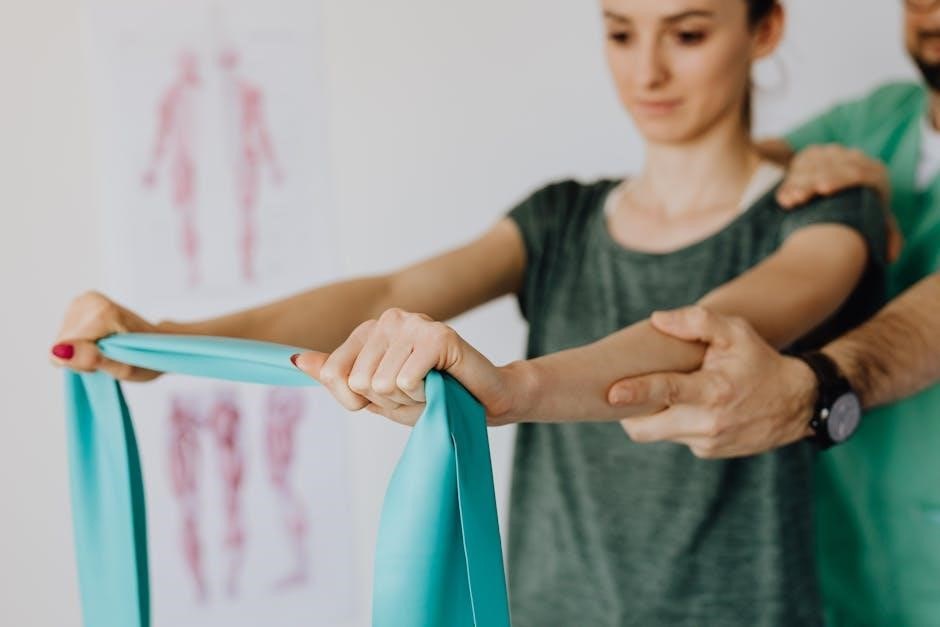
A comprehensive physical examination is crucial for diagnosing ITBS, focusing on identifying pain reproduction and assessing biomechanical factors. Clinicians typically palpate along the iliotibial band, specifically at the lateral femoral epicondyle, to pinpoint tenderness – a common indicator of the condition.
Several provocative tests are employed, including the Ober’s test, which evaluates IT band tightness, and the Noble compression test, designed to recreate pain during knee flexion. Observing the patient’s gait and assessing hip and core stability are also vital components.
The examination aims to differentiate ITBS from other conditions presenting with similar symptoms, such as meniscal tears or lateral collateral ligament injuries. A skilled examiner will carefully analyze the patient’s history and physical findings to arrive at an accurate diagnosis, guiding appropriate rehabilitation strategies.

Ruling Out Other Conditions
Accurate diagnosis necessitates differentiating ITBS from conditions mimicking its symptoms, primarily those affecting the lateral knee. Meniscal tears, particularly lateral meniscus injuries, can present with similar pain patterns and require careful evaluation through specific clinical tests like the McMurray test;
Lateral collateral ligament (LCL) sprains also need exclusion, assessed via varus stress testing. Additionally, conditions like popliteus tendinopathy or referred pain from the hip joint must be considered. A thorough neurological examination helps rule out nerve entrapment syndromes.
Imaging studies, such as MRI, are sometimes utilized, not to directly visualize the IT band (as it’s rarely the primary issue), but to exclude other structural pathologies. Precise diagnosis ensures targeted treatment, avoiding ineffective interventions for misdiagnosed conditions and optimizing patient outcomes.
ITBS Stretches: A Comprehensive Guide
Effective ITBS management relies on targeted stretching routines, including standing and lying variations, alongside foam rolling to release tension and improve flexibility.
Standing IT Band Stretch
To perform the standing IT band stretch, begin by standing upright with your affected side facing a wall or stable support for balance. Cross the leg opposite the affected side behind your standing leg.
Lean your torso away from the wall, reaching towards the opposite side, while keeping your feet flat on the floor and your back straight. You should feel a stretch along the outside of your hip and thigh.
Hold this position for approximately 20-30 seconds, ensuring you maintain a controlled and comfortable stretch. Repeat the stretch 2-3 times on each side, focusing on a gentle, sustained pull rather than bouncing.
Remember to consult with a healthcare professional before starting any new exercise program, especially if you have pre-existing conditions. Proper form is crucial to avoid injury and maximize the stretch’s effectiveness.
This stretch helps to lengthen the iliotibial band and surrounding tissues, potentially alleviating pain and improving flexibility in individuals with ITBS.
Lying IT Band Stretch
The lying IT band stretch is performed by lying on your back with both legs extended. Cross the affected leg over the other, bringing your knee towards your chest. Reach across your body with the hand on the same side as the bent leg.
Gently pull your knee towards the opposite shoulder, keeping your shoulders flat on the floor. You should feel a stretch along the outer thigh and hip of the crossed leg. Avoid twisting your spine during this movement.
Hold the stretch for 20-30 seconds, breathing deeply and maintaining a comfortable intensity. Repeat this stretch 2-3 times on each side, ensuring a controlled and gradual pull.
As with all stretches, listen to your body and stop if you experience any sharp pain. This stretch can be modified by using a towel or strap to assist in pulling the knee closer.
Regularly performing this stretch can contribute to improved flexibility and reduced discomfort associated with iliotibial band syndrome.
Foam Rolling for IT Band Release
Foam rolling the IT band involves positioning yourself with the foam roller under the outside of your thigh, near the hip. Support your weight with your hands and the opposite leg, ensuring controlled movement.
Slowly roll from just above the knee to the upper thigh, pausing on any tender spots for 20-30 seconds. This targeted pressure helps release tension and improve flexibility within the IT band and surrounding tissues.
Maintain a slow and deliberate pace, avoiding rapid or bouncing movements. Focus on breathing deeply throughout the process to enhance relaxation and reduce discomfort.
While often described as painful, the sensation should be a “good pain” – a deep, aching feeling rather than sharp or stabbing pain. Adjust the pressure as needed.
Foam rolling can be incorporated into a warm-up or cool-down routine, contributing to improved muscle recovery and reduced IT band syndrome symptoms.
Hip Flexor Stretches for ITBS
Tight hip flexors can contribute to ITBS by increasing stress on the iliotibial band. Stretching these muscles is crucial for restoring proper biomechanics and alleviating symptoms.
A common hip flexor stretch involves kneeling on one knee, with the other foot flat on the floor in front of you. Gently lean forward, keeping your back straight, until you feel a stretch in the front of your hip.
Another effective stretch is the lying hip flexor stretch, performed by lying on your back and pulling one knee towards your chest, while keeping the other leg extended.
Hold each stretch for 20-30 seconds, repeating 2-3 times. Remember to breathe deeply and avoid bouncing, focusing on a gentle, sustained stretch.
Addressing hip flexor tightness alongside IT band stretching and strengthening exercises provides a more comprehensive approach to ITBS rehabilitation.

Strengthening Exercises for ITBS
Strengthening key muscle groups – hip abductors, gluteus maximus, and core – is vital for stabilizing the hips and knees, aiding ITBS recovery.
Hip Abductor Strengthening
Hip abductor muscles play a crucial role in stabilizing the pelvis and controlling leg movement during activities like running, directly impacting ITBS symptoms.

Weak hip abductors can lead to increased stress on the iliotibial band, exacerbating pain and inflammation; therefore, targeted strengthening is essential for rehabilitation.
Side-lying leg raises are a foundational exercise, engaging the gluteus medius – a primary hip abductor – to improve strength and endurance. Perform these slowly and controlled.
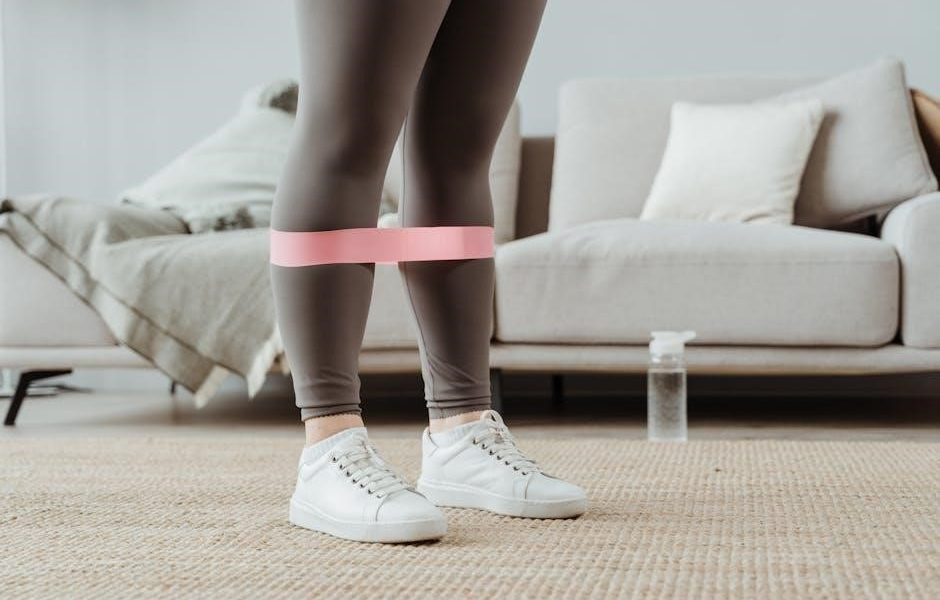
Clamshells, using a resistance band around the knees, further isolate the gluteus medius, enhancing hip stability. Focus on maintaining proper form throughout the movement.
Standing hip abduction with a resistance band also effectively strengthens these muscles. Ensure a stable core and controlled motion to maximize benefits and prevent injury.
Progressive overload, gradually increasing resistance or repetitions, is key to continued improvement. Consistent hip abductor strengthening contributes significantly to long-term ITBS management.
Gluteus Maximus Strengthening
The gluteus maximus, the largest muscle in the body, is vital for hip extension, external rotation, and pelvic stability – all crucial factors in addressing ITBS.
Weakness in this muscle can contribute to altered biomechanics, increasing stress on the IT band and potentially triggering or worsening symptoms. Strengthening it is therefore paramount.
Glute bridges are an excellent starting point, effectively activating the gluteus maximus. Focus on squeezing the glutes at the top of the movement and maintaining a neutral spine.
Hip thrusts, often performed with added weight, provide a more challenging variation, further enhancing gluteal strength and power. Proper form is essential to avoid injury.
Squats, a compound exercise, also engage the gluteus maximus, alongside other lower body muscles. Varying squat depth and adding resistance can increase the challenge.
Integrating these exercises into a rehabilitation program helps restore proper movement patterns, reduce IT band tension, and improve overall lower limb function for lasting relief.
Core Strengthening for Stability
A strong core is fundamental for maintaining proper pelvic alignment and controlling lower limb movement, playing a significant, often overlooked, role in ITBS management.
Weak core muscles can lead to compensatory movements and increased stress on the IT band, exacerbating symptoms. Strengthening these muscles provides essential stability.
Planks, a foundational exercise, effectively engage multiple core muscles, improving endurance and stability. Focus on maintaining a straight line from head to heels.
Side planks target the obliques, crucial for lateral stability and preventing excessive hip adduction, a common contributor to ITBS. Hold the position with proper form.
Bird-dogs challenge core stability while promoting coordination and balance. Maintain a neutral spine throughout the movement, avoiding rotation or arching.
Incorporating these exercises builds a solid foundation of core strength, enhancing pelvic control, reducing compensatory movements, and supporting effective ITBS rehabilitation.

ITBS Rehabilitation Programs
Effective ITBS programs integrate stretching, hip strengthening, and activity modification, though standardized protocols are lacking; individualized plans are often necessary for optimal recovery.
IT Band Stretching Programs
IT band stretching programs are a cornerstone of ITBS rehabilitation, aiming to improve flexibility and reduce tension in the iliotibial band. However, directly stretching the IT band itself proves challenging due to its dense, fibrous nature. Therefore, programs typically focus on stretches that target surrounding muscles, influencing IT band mechanics.
Commonly recommended stretches include the standing IT band stretch, performed by crossing one leg behind the other and leaning towards the side, and the lying IT band stretch, involving a similar leg position while supine. These stretches aim to lengthen the tissues surrounding the IT band, indirectly alleviating tension.
It’s crucial to perform these stretches gently and avoid overstretching, as aggressive stretching can exacerbate symptoms. Combining IT band stretches with foam rolling and hip flexor stretches can further enhance flexibility and address contributing factors to ITBS. Remember to consult with a healthcare professional before initiating any new exercise program.
Hip Strengthening Programs
Hip strengthening programs are vital in addressing ITBS, as weak hip abductors and gluteal muscles contribute significantly to altered biomechanics and increased stress on the IT band. Strengthening these muscles helps stabilize the pelvis and control lower limb movement, reducing IT band strain.
Effective exercises include hip abduction exercises, such as side-lying leg raises and clam shells, targeting the gluteus medius. Gluteus maximus strengthening exercises, like bridges and squats, are also crucial for overall hip stability. These exercises should be performed with proper form to maximize effectiveness and prevent injury.
Progressive overload is key – gradually increasing resistance or repetitions as strength improves. Integrating hip strengthening into a comprehensive rehabilitation program, alongside IT band stretches and activity modification, yields the best results. A healthcare professional can tailor a program to individual needs and monitor progress effectively.
Combined Stretching and Strengthening
Combining IT band stretching with hip and core strengthening represents the most effective approach to rehabilitating Iliotibial Band Syndrome (ITBS). While stretching aims to improve IT band flexibility and reduce tension, strengthening addresses the underlying biomechanical imbalances that contribute to the condition.
A well-rounded program integrates exercises targeting hip abductors (gluteus medius), gluteus maximus, and core muscles. This synergistic effect enhances pelvic stability, controls lower limb alignment, and minimizes stress on the IT band during activity. Simply stretching the IT band in isolation often provides limited long-term relief.

Implementing a progressive program, starting with gentle stretches and gradually incorporating strengthening exercises, is crucial. Consistent adherence and proper form are paramount for optimal outcomes. Consulting a physical therapist ensures a personalized plan tailored to individual needs and monitors progress effectively, maximizing recovery potential.
Additional Considerations
Activity modification and proper footwear are vital alongside stretching and strengthening; adjusting training load and ensuring supportive shoes can significantly impact ITBS recovery.
Activity Modification
A cornerstone of ITBS management is thoughtfully adjusting activity levels to allow the inflamed iliotibial band and surrounding tissues to heal. This doesn’t necessarily mean complete cessation of exercise, but rather a strategic reduction in intensity, duration, or frequency of aggravating activities.
For runners, this might involve decreasing mileage, avoiding uphill running or running on cambered surfaces, and incorporating cross-training activities like swimming or cycling that place less stress on the IT band. Listening to your body is paramount; pain should be a guide, and pushing through discomfort can exacerbate the condition.
Gradual return to activity is crucial. Avoid sudden increases in training load. A progressive approach, slowly reintroducing intensity and volume, minimizes the risk of re-injury. Consider consulting with a physical therapist or athletic trainer to develop a personalized activity modification plan tailored to your specific needs and recovery progress.
Importance of Proper Footwear
Selecting appropriate footwear plays a significant, often underestimated, role in both the prevention and management of Iliotibial Band Syndrome (ITBS). Ill-fitting or worn-out shoes can contribute to altered biomechanics, increasing stress on the IT band and surrounding structures.
Factors to consider include arch support, cushioning, and stability. Individuals with high arches may benefit from shoes with ample cushioning, while those with flat feet might require more supportive footwear to prevent overpronation. Regularly replacing running shoes – typically every 300-500 miles – is essential to maintain adequate support and shock absorption.
A professional shoe fitting at a specialty running store can be invaluable. Experts can analyze your gait and recommend shoes best suited to your foot type and running style. Addressing footwear issues is a proactive step towards alleviating ITBS symptoms and preventing recurrence, complementing stretching and strengthening exercises.